
Learn how to file a state tax return after moving...
Read MoreHow Employee Payroll Services Lakewood, CO Manage Deductions
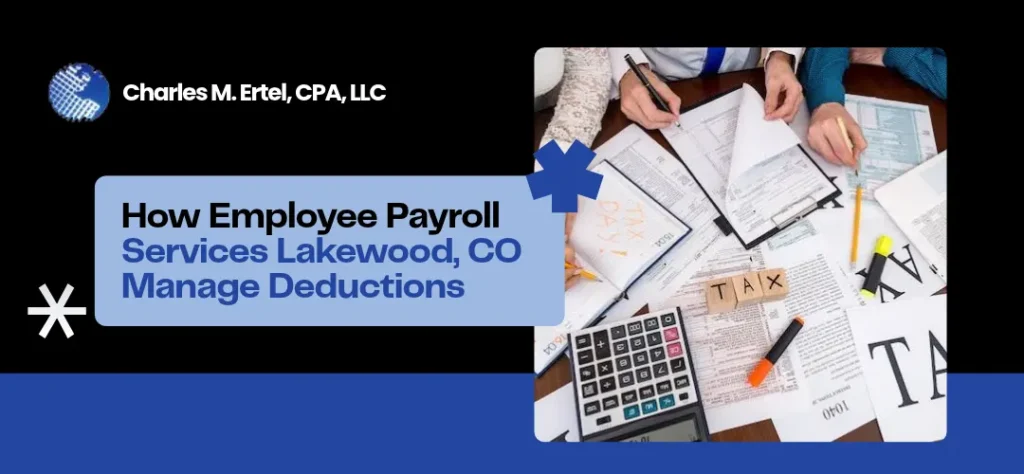
Managing employee deductions requires accurate calculations, updated tax information, and consistent payroll records. Business owners must account for federal and state tax withholding, insurance premiums, retirement contributions, and other authorized adjustments before issuing employee payments. employee payroll services Lakewood, CO help businesses organize these responsibilities while maintaining accurate compensation records. Understanding how deductions work allows employers to identify discrepancies, avoid unnecessary payroll complications, and provide employees with clear information about their earnings.
What Types of Deductions Affect Employee Paychecks?
Employee deductions generally fall into mandatory and voluntary categories. Mandatory deductions include federal income tax, Social Security, Medicare, applicable state income tax, and court-ordered garnishments. Employers must calculate these amounts according to applicable regulations and employee withholding information.
Voluntary deductions may include health insurance premiums, retirement contributions, and other employee-selected benefits. Their tax treatment depends on the specific benefit arrangement and applicable requirements.
Separating these deductions helps employers understand how each amount affects gross wages and take-home pay. It also makes payroll reviews easier because individual contributions can be checked against employee records and benefit agreements.
How Federal and Colorado Tax Withholding Is Calculated
Federal income tax withholding depends on an employee’s Form W-4, taxable wages, and IRS guidelines. Social Security and Medicare taxes are calculated separately according to federal employment tax requirements.
Colorado employers must also account for state income tax withholding based on applicable rules and employee information. Reviewing updated withholding forms helps businesses maintain accurate paycheck calculations and avoid unnecessary deduction errors.
Why Pre-Tax and Post-Tax Deductions Must Be Classified Correctly
Not all paycheck deductions receive the same tax treatment. Pre-tax contributions may reduce taxable wages when eligible benefit arrangements qualify, while post-tax deductions are taken after the applicable tax calculations.
Qualifying retirement contributions and certain insurance premiums may receive pre-tax treatment. Incorrect classification can affect employee take-home pay and year-end reporting, so employers should maintain accurate benefit records and verify deduction requirements.
A consistent payroll processing Lakewood, CO approach helps businesses review deduction categories, confirm employee elections, and identify calculation differences before payments are finalized.
How Employers Manage Employee Benefit Contributions
Employee benefits require careful tracking because contribution amounts can vary between workers. Health insurance premiums, retirement plans, and other benefits depend on individual enrollment choices and employer arrangements.
Employers should maintain updated records of benefit selections, contribution amounts, and authorized changes. When employees update their coverage or retirement elections, payroll records should reflect those adjustments. Clear communication also helps employees understand how benefit contributions affect their take-home pay. Explaining deduction changes can prevent confusion and payment-related questions.
Why Colorado Payroll Deduction Rules Matter
Colorado employers must follow state wage laws when deducting employee pay. Under Colorado Revised Statutes Section 8-4-105, deductions must meet specific legal requirements, such as applicable laws or qualifying written agreements.
Employers cannot automatically deduct money for workplace damage or business losses. They must also itemize deductions, explain their reasons, and maintain supporting records to demonstrate compliance.
Businesses reviewing a payroll service Lakewood, CO arrangement should consider how deduction records, employee authorizations, and applicable wage requirements are handled. Reviewing these details can help prevent avoidable disputes and payment errors.
Common Payroll Deduction Mistakes Businesses Should Avoid
Even established businesses can experience payroll discrepancies when employee information or deduction records are outdated. Some mistakes involve incorrect benefit amounts, while others result from missing authorizations or inaccurate tax classifications.
Employers should watch for these common issues:
- Outdated employee information: Old withholding forms can produce incorrect tax calculations.
- Incorrect deduction categories: Misclassifying contributions can affect taxable wages and reporting.
- Missing authorization: Certain voluntary deductions require appropriate employee agreements or authorization.
- Unreviewed changes: Insurance premiums and retirement contributions may change after enrollment updates.
- Incomplete records: Missing documentation makes it harder to explain deductions or investigate discrepancies.
Regular reviews help employers identify these problems before they affect multiple pay periods. Businesses should also compare payroll records against benefit statements and employee information to confirm that deductions remain accurate.
How Small Businesses Can Improve Payroll Accuracy
Small businesses can improve payroll accuracy by maintaining updated employee forms, benefit elections, tax withholding details, and deduction authorizations. Regularly reviewing pay statements and investigating discrepancies helps prevent payment errors, reduce administrative pressure, and keep payroll records organized.
Businesses considering payroll services small business Lakewood, CO should evaluate whether their payroll support addresses deduction calculations, tax responsibilities, employee records, and reporting requirements. A suitable process can make compensation management more organized as staffing needs grow.
Choose Charles M. Ertel, CPA, LLC for Payroll Support
Charles M. Ertel, CPA, LLC supports individuals and businesses with tax and accounting needs, including payroll-related responsibilities. Proper attention to employee deductions, tax calculations, and financial records helps business owners maintain better oversight of compensation expenses. The firm can help business owners discuss their accounting and payroll concerns and understand the requirements relevant to their operations.
Need payroll assistance? Contact Charles M. Ertel, CPA, LLC to discuss your business needs.
Frequently Asked Questions
Common mandatory deductions include applicable federal and state income taxes, Social Security, Medicare, and court-ordered garnishments. Requirements depend on employee circumstances and applicable laws.
Pre-tax deductions are taken before calculating certain applicable taxes when the benefit qualifies for that treatment. Post-tax deductions are generally taken after the relevant tax calculations. The distinction affects taxable wages and take-home pay.
Not automatically. Colorado law limits deductions for workplace losses and equipment. Employers must follow permitted deduction categories and applicable documentation requirements before withholding employee wages.
Employees should compare their pay statements with previous payments, benefit enrollment records, and agreed contribution amounts. Unexpected changes should be reported to the employer for review.
Employers should review deductions during every payroll cycle and whenever employees change withholding information, benefits, or authorized contributions. Regular checks help identify discrepancies before they continue across multiple payments.
RECENT POSTS

How to File a State Tax Return After Moving to Lakewood, CO
Learn how to file a state tax return after moving...
Read MoreHow Accountants for Individuals Lakewood, CO Review Side Income
Learn how accountants for individuals Lakewood, CO help review side...
Read More
How Professional Accounting Lakewood, CO Uncovers Costly Errors
Explore tax planning for small business Lakewood, CO, including expense...
Read More
How Employee Payroll Services Lakewood, CO Manage Deductions
Explore tax planning for small business Lakewood, CO, including expense...
Read More
How Tax Planning for Small Business Lakewood, CO Handles Uneven Revenue
Explore tax planning for small business Lakewood, CO, including expense...
Read More
Why Tax Accountants Lakewood, CO Examine Retirement Withdrawals
Learn how tax accountants Lakewood, CO review retirement withdrawals, taxable...
Read More